Pierre Vassiliadis: Success in science starts with curiosity, resilience and balance
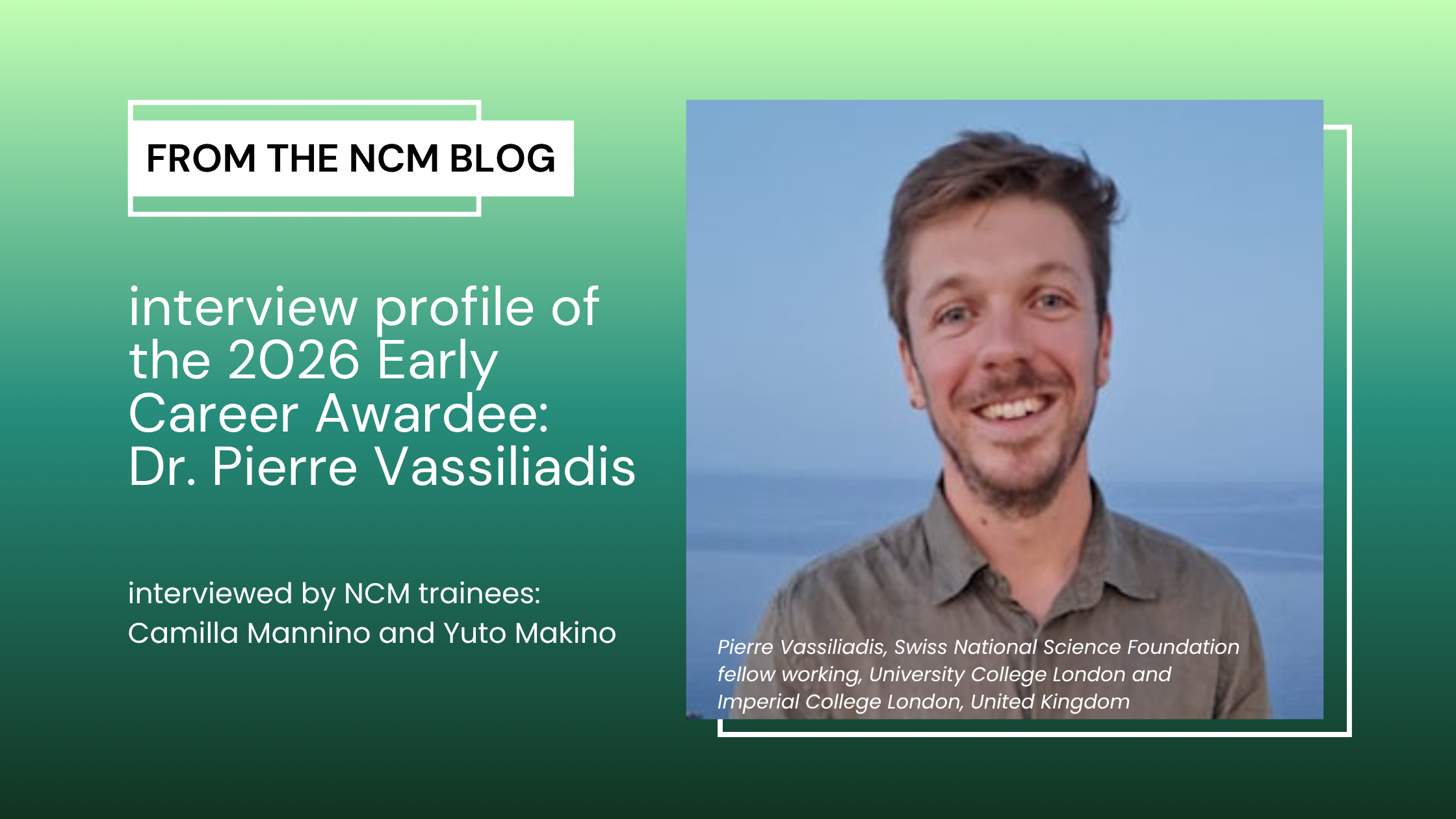
An interview profile of the 2026 Early Career Awardee, Dr. Pierre Vassiliadis
Watch the full interview here.
For Pierre Vassiliadis, success in research has never been about being flawless. It is not about a perfect CV, a perfectly linear path, or a career without setbacks. If anything, his story suggests the opposite: what truly matters is curiosity, the ability to keep going after rejection, to plan ahead, and the wisdom to protect the human side of scientific life.
From the beginning, Pierre was drawn to neuroscience because of its extraordinary multidisciplinarity. What appealed to him from the start was the way the field bridges very different disciplines — from psychology and biology to computer science and medicine — and brings them together around one central topic: the brain. That ability to connect many areas of research, combined with his fascination for how the brain is able to generate flexible behavior, drove his initial interest in the field.
And yet, his path was far from predictable. Initially, Pierre wanted to study political science. He applied to several schools in the UK and France and was rejected from all the programs he had hoped to enter. Looking back, though, this failure became a gift. Medicine opened a new direction, and through it, a path toward neuroscience that he had already considered from the start. In both political science and neuroscience, he says, there was a common thread: a deep interest in human beings, in how people behave, interact, and make sense of the world.
The same principle appears in the way Pierre speaks about setbacks in academia. Rejected papers, unsuccessful grants, and conference submissions that do not go through are all part of the process. He openly recalls that he himself received many rejections for NCM presentations, making it especially meaningful that this year he gave his first talk at NCM while also receiving the award. His message to younger researchers is clear: never give up. Review processes contain an element of randomness, criticism is inevitable, and sometimes the harshest feedback comes precisely when the work is bold and important. In those moments, the challenge is to use constructive criticism to improve without losing confidence in the value of the question being asked.
This mindset is closely tied to what Pierre values most in academic life: freedom. He speaks with gratitude about the ability to choose what he wants to investigate, to follow important questions, and to take unexpected turns. There is uncertainty in research, of course, but for him that uncertainty is not only a difficulty, it is also part of what makes scientific life exciting. Five years ago, he says, he could not have predicted the work he is doing now. That openness to change is what has helped shape his trajectory.
Among the work he is most proud of are his studies on temporal interference stimulation during reinforcement learning and, more recently, effort-based decision making. These projects were technically demanding, long, and deeply collaborative, often taking three to four years from the beginning of the project to publication. What makes them especially meaningful to him is not only their scientific complexity, but also their possible clinical implications.
That translational motivation has become even more central in recent years. Pierre explains that after some of his early work on temporal interference received media coverage in French-speaking countries, he began receiving emails from patients and family members almost every day for a month. That response had a profound impact on him. It gave his work a new sense of mission: not only to use brain stimulation as a scientific tool, but also to move toward applications that may eventually help people with motor impairment or action control disorders. His research is no longer driven only by scientific fascination, but by the hope of making a meaningful difference for patients and caregivers.
When asked what he values in junior collaborators, Pierre mentions involvement, rigor, curiosity, passion, and the ability to deal with uncertainty. Biology and psychology are fields in which uncertainty and complexity are often unavoidable, and one of the main challenges at the beginning is learning how to deal with them. In many cases, it is impossible to be completely certain about everything, so an important skill is becoming comfortable with that uncertainty while still thinking carefully about how to design the next experiment in order to answer the question more effectively. What stands out in his response is the idea that excellence does not mean always knowing exactly what to do, but rather remaining engaged, reasoning clearly under uncertain conditions, and being willing to make the extra effort that can turn a very good project into one that truly stands out.
But Pierre is equally clear that scientific success cannot come at the expense of the rest of life. Some balance is needed. Young researchers, he says, need to know themselves and their limits. They need to keep things outside research, hobbies, routines, people, spaces of belonging. Especially when living abroad or building a career far from home, it is essential to “find your people”. These connections become a source of resilience when failures and difficult periods inevitably arrive.
In this context, even something as ordinary as a coffee break takes on a deeper meaning. Pierre reflects on how much he realized during COVID the importance of informal conversations: the short exchange over coffee, the lunch discussion, the ten-minute moment in which a problem is shared and suddenly seen from a different angle. These breaks are not a distraction from science; they are often where science happens. Creative ideas often emerge in these informal encounters. In his view, balance is not separate from productivity, it is one of its conditions.
So what, ultimately, makes an early-career researcher successful? Research, he says, demands versatility: conceptual, technical, scientific, and strategic skills all matter. But if he had to identify one key ingredient, it would be the ability to plan ahead. Successful researchers often have a vision for the coming years, seek funding early, and work toward independence as soon as possible. In a profession where papers and grants can take years to materialize, planning one or two steps in advance is essential. Yet planning alone is not enough. Ambition matters too: the willingness to pursue bold ideas, to try things that may not work, and to combine strategic thinking with hard work.
Receiving the NCM Early Career Award carries special meaning within this broader story. Pierre describes it as a real honor, especially because NCM is a community he has followed since the beginning of his PhD, first attending the conference in Toyama in 2019 as a doctoral student. To be recognized by a community that has, in a sense, accompanied his progression from an early PhD student to an award recipient makes the recognition deeply personal. It also places him in the company of previous awardees whom he greatly admires and gives him hope that his own research and story may inspire younger members of NCM, just as earlier recipients once inspired him.
About the Interviewers
Pierre was interviewed by NCM trainees Camilla and Yuto.

Camilla Mannino
Paris Brain Institute (ICM), Sorbonne Université
Camilla Mannino earned her Master degree in Neural Engineering from the Sant’Anna School of Advanced Studies. During her studies, she conducted her master’s thesis at the NeuroRestore Research Center (CHUV & EPFL), focusing on cortical dynamics during locomotion in healthy and spinal cord–injured subjects. Currently, she is pursuing her Ph.D. within the NERV team at the Paris Brain Institute (ICM), Sorbonne Université, supported by Inria. Her doctoral research focuses on implementing a novel functional connectivity metric based on neuronal avalanches to improve Brain–Computer Interface devices.
Yuto Makino
Center for Information and Neural Networks (CiNet), National Institute of Information and Communications Technology (NICT)
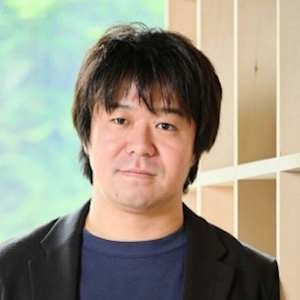
Yuto Makino is currently a postdoctoral researcher at the Center for Information and Neural Networks (CiNet), National Institute of Information and Communications Technology (NICT), under the supervision of Dr. Masaya Hirashima. He is a motivated and innovative researcher in motor learning and computational neuroscience, combining behavioral experiments and computational modeling to investigate how humans acquire, modify, and flexibly reuse motor memories. He has published in international journals, presented his work at global conferences, and received the Young Investigator Award from the Motor Control Society of Japan. His current research focuses on the neural mechanisms underlying motor learning and skill acquisition, including approaches using brain–computer interfaces. He aims to bridge neuroscience with education, rehabilitation, and sports by establishing principles that support effective learning and skilled performance.