NCM President Kathleen Cullen on her favourite conference, the rumor that started her interest in neuroscience, and her advice for trainees
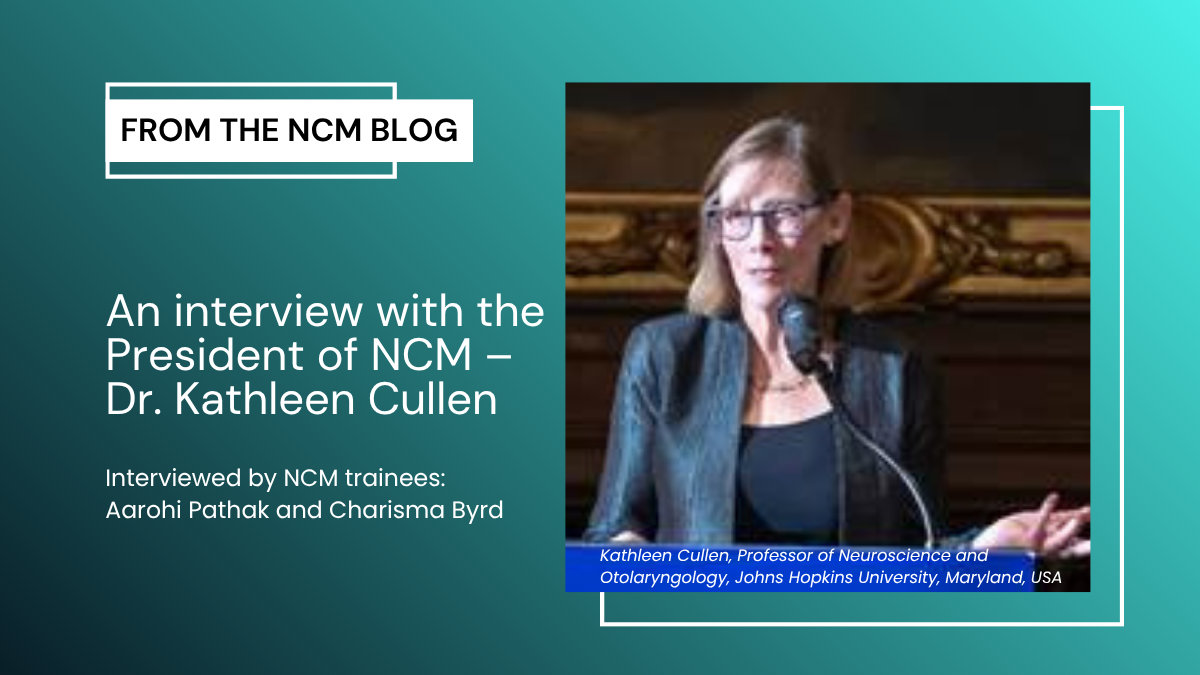
An interview with the President of NCM – Dr. Kathleen Cullen
You can watch the interview with Dr. Cullen here.
As a first “episode” of the Trainee interview series, we spoke with Dr. Kathleen Cullen, Raj and Neera Singh Professor of Biomedical Engineering at Johns Hopkins University, with appointments in Neuroscience and Otolaryngology-Head and Neck Surgery, Director of the Johns Hopkins Center for Hearing and Balance, and Director of the Systems Neuroscience and Neuroengineering Laboratory. We aimed to dive deeper with Dr. Cullen to discover who she is beyond research. She candidly shared early experiences that shaped her career, advice for younger researchers, and her vision for NCM.
Most of you know Kathleen as the President of NCM, but who is she beyond the role? She loves cooking, skiing, has a pandemic rescue mutt named Pumba and a chihuahua named Ziggy – adopted to keep Pumba company – and has kept up an impressive 1000+ day French Duolingo streak. Très impressionnant!
When asked about her research, Dr. Cullen explains that her group studies how the brain controls and interprets self-motion during natural active behaviors, such as walking, running, and while maintaining our posture, as well as during learning skilled self-motion tasks like driving. Working at the intersection of neuroscience, engineering, and medicine, her lab investigates how vestibular, visual, and proprioceptive signals are encoded and transformed to support stable perception and accurate motor control. A central theme of her work is prediction. In everyday life, sensory signals arise both from changes in the external world and from the consequences of our own actions. The brain must distinguish between unexpected sensory inputs from the world and the sensory consequences of our own actions. Dr. Cullen’s work asks how the brain compares predicted and actual sensory consequences of action, allowing it to suppress expected self-generated input while remaining sensitive to unexpected motion. This distinction is essential for stable perception and accurate motor control during everyday behaviors such as walking, maintaining posture, and navigating through the world. This fundamental work is also now beginning to translate into new technologies. Her lab’s research is helping inform the development of the next generation of vestibular prostheses and, more recently, efforts toward a “cerebellar bypass” — a neural network-based approach that could one day help people with cerebellar impairment stay upright during everyday behaviors.
Serendipity
Dr. Cullen’s curiosity about the brain started in her freshman hall, where she was a first-year electrical engineering student. Her neighbour, who was taking a neuroscience course, came back with what Kathleen jokingly describes as “a rumor”: neurons use electricity to encode and transmit information. The idea fascinated her. She enrolled in a neuroscience course the following year, eventually completing a joint major and taking almost all her electives — apart from an existentialism course — in neuroscience.
Her fascination was further fed by the ability to combine an engineering perspective, with its formalization and control systems analyses to develop testable models, with neuroscience. Dr. Cullen illustrates how the pioneering work of David Robinson on the oculomotor system became pivotal in her career, showing her as an undergrad how to apply basic engineering principles to formalize approaches to thinking about neural circuits and to test predictions based on those formalizations. He even used his engineering background to come up with new technology. Kathleen smiles when she tells us that David Robinson happened to be one of the founding fathers of the biomedical engineering department at Johns Hopkins, where she currently works — “full circle,” she says.
Keeping the spirit
Dr. Cullen attended her first NCM over thirty years ago as a newly minted faculty member and describes how the community was more PI-focused than it is now. She describes the growing involvement of students and postdocs as one of the most positive changes since the early days and mentions how trainee members are central to the meeting by shaping the scientific discussion. To illustrate how the community has become more welcoming and inclusive, she describes how, during her time as Vice President, she looked closely at who was represented on the NCM podium. Although women had grown to represent nearly half of the NCM community, their representation on the podium had lagged far behind — often closer to 10–20% — for decades. This helped motivate a more intentional effort to ensure that sessions better reflected the breadth and diversity of the NCM membership.
What has not changed — and what she finds — is the fact that everyone hears the same talks. It is also this that she lists when mentioning challenges for NCM: balancing tradition with evolution. On the one hand, adding parallel sessions would make a bigger meeting possible, but on the other hand, she prefers to preserve the spirit of the single-track format, where people working across species, methods, and frameworks all engage with the same ideas. This opportunity for dialogue is also what she advises trainee members to take advantage of. In times of rapid developments in tools and techniques, she advises trainee members to ask questions, engage in dialogue, learn from other people, and discover what the hot questions are — and if you need a new tool, learning it with an eye on the question will go much faster and ultimately be more impactful.
Hot questions and “the best job”
When we asked Dr. Cullen what her younger self would be surprised about, she answers that she’d never expected to have a job like hers, at a big research institute and with the ability to do what she does — grateful and smiling: “it’s just amazing, the best job.” The positivity stayed when we asked what people don’t see about her job as the NCM president: she answers, “how much fun it is.” For the final question on what is the best part of NCM, she is clear: “the people and the conversations — it is a community of friends as well as a community of colleagues,” and smiling she concludes the interview with the words “which seems the perfect way to finish.”
About the Interviewers
Dr. Kathleen Cullen was interviewed by NCM trainees Aarohi and Charisma.
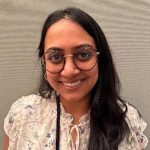
Aarohi Pathak
University of Toronto
Aarohi Pathak is currently pursuing her Ph.D. at the Faculty of Kinesiology & Physical Education, University of Toronto, under the supervision of Professor Timothy Welsh in the Action and Attention Lab. Her doctoral research investigates the mechanisms of interference that emerge when performing two similar tasks in close succession, as well as the contributions of explicit and implicit processes to learning in visuomotor adaptation tasks. Outside of her PhD, Aarohi practices as a registered Occupational Therapist, working with neurodivergent children to help them meet their occupational goals. Her future research aspirations include developing neuroscience-backed rehabilitation training protocols to support sensory processing in children with autism and training protocols to support sensory processing in children with autism and impaired limb use in children with cerebral palsy.
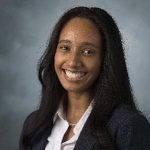
Charisma Byrd
University of Georgia
Charisma Byrd is a PhD student in Biomechanics in the Department of Kinesiology at the University of Georgia, where she conducts research in the Cognition and Dexterity Lab under the supervision of Dr. Jing Xu. Her current work investigates the neuromechanical foundations of hand dexterity, integrating 3D force-sensing technology, quantitative movement analysis, and electromyography signal decomposition methods to characterize skilled hand and finger movements in healthy individuals and people recovering from neurological injury, such as stroke. More broadly, she is interested in how biomechanics and neuromechanics can deepen our understanding of human movement and inform more sensitive approaches to assessment and rehabilitation. Beyond research, Charisma is passionate about mentorship, science communication, and supporting trainee communities.