
NCM Elections
Slate of Candidates for 2026 – 2029 Term
The following candidates have expressed interest and are willing to serve on the Board for the 2026 – 2029 term if elected. Please review a summary paragraph as to how each nominees skills, expertise and current research interests will benefit the current Board and how they will bring diversity to the Society below. All members are welcome to contact these candidates to inquire about their positions prior to voting.
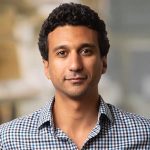
Eiman Azim
Salk Institute for Biological Studies & University of California, San Diego School of Biological Sciences
I first attended NCM in 2012 and have been an active participant and presenter ever since. As a junior postdoc, I entered NCM with a molecular–genetic background and was just beginning to engage with fundamental questions in motor control. Exposure to the society and its breadth of science was transformative. Fourteen years later, I am proud to continue learning from the community and to contribute a rodent systems perspective to this interdisciplinary environment. Through NCM, I have formed collaborations and friendships and now aim to pass these benefits on.
As a Board member, I would highlight NCM as a scientific home across career stages and model systems, with emphasis on early-career scientists. I have co-organized international motor control meetings at Salk and OIST that place senior trainees center stage and would extend these efforts within NCM. I am committed to enhancing diversity and inclusion through transparent governance and programs that lower barriers to participation, informed by leadership roles at Salk, UCSD, and the IBRO US/Canada Regional Committee.
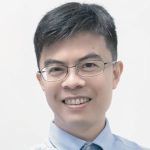
Vincent Cheung
School of Biomedical Sciences and Gerald Choa Neuroscience Institute, The Chinese University of Hong Kong
I presented my first NCM abstract in 2006 as a graduate student. Since then, I have participated in >10 NCM meetings as a session moderator, speaker for satellite meetings, or poster presenter. As an NCM Board Member, in addition to the usual duties, I will aim to encourage meaningful dialogue between groups who study the motor system with different approaches. Also, as a faculty member based in Hong Kong with collaborators in Chinese Mainland, Taiwan, Japan, and Australia, I am in a good position to enhance the visibility of NCM in the Asian-Pacific region, where motor neuroscience, neural engineering and neuro-rehabilitation are growing fast. It is fair to say that the Asian-Pacific region is underrepresented in the NCM membership. If elected, as an Asian-Pacific representative in the Board I will aim to encourage more researchers in the region to join the society and submit high-quality abstracts and proposals to NCM conferences.
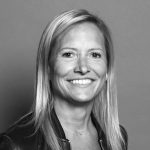
Julie Duque
Université catholique Louvain
I have greatly enjoyed serving on the NCM Board and would be pleased to continue contributing to the society. The NCM meeting is the conference my lab and I attend most consistently, as our research focuses on human motor control and decision making (www.coactionslab.com). NCM provides an unusually strong scientific and social environment for trainees and senior researchers, and I actively encourage my team members and collaborators to participate.
Over the past term, I have attended the annual meetings, served as a session timekeeper, participated in abstract selection, and promoted the meeting within my network. As a member of the Social Media Committee, I contributed to discussions on NCM’s social media strategy, including what to publish and how to organize communications across platforms (LinkedIn and Bluesky). I would be happy to continue supporting these activities.
As President of the Belgian Society for Neuroscience since 2022 and a member of the FKNE alumni network, I am especially mindful of supporting an inclusive community across career stage, gender, geography, cultural background, identity, and research area.
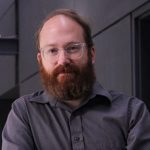
Jonathan Michaels
Neural Control & Computation Lab, York University
NCM has been my favourite conference since I first attended in 2014. I have been an active contributor, presenting five times as a speaker, once as a poster presenter, and once as a panel organizer. As a board member, I will actively promote research that connects experiments with computational approaches and bridges understanding across species to explain animal and human behaviour.
My scientific career has benefited from systemic privileges. This awareness drives my commitment to spending effort to dismantle barriers for others. Drawing on my experience as a member of my postdoc department’s EDI committee, I will advocate for programming that ensures trainees from all backgrounds are supported, heard, and represented in our Society’s leadership and conferences. Meeting awards to support scientists with dependent family members are especially important to me, as someone who knows how hard it is to travel when you have dependents at home.
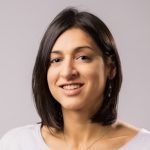
Jasmine Mirdamadi
Department of Rehabilitation and Movement Science, University of Vermont
NCM has provided a continual source of scientific growth, from attending as a PhD student to postdoctoral fellow, and soon as a new faculty member. Through organizing a symposium, receiving a travel award, and co-authoring the Dublin meeting summary with trainees from around the world, I’ve appreciated what makes NCM so unique: its ability to advance our understanding of movement by integrating diverse models, mechanisms, behaviors, and methods, generating new insights that would not otherwise emerge.
I bring a perspective that bridges mechanistic-based discoveries and clinical practice, from upper limb multisensory control to whole-body balance behavior. My experiences as a junior faculty member, particularly in a rural environment, provides a unique lens into accessibility that helps me to turn challenges into collaborative opportunities. I will enhance diversity and inclusion by promoting representation across mechanisms, movement domains, clinical populations, and career stages that will cultivate new ideas and advance NCM’s mission.

Matthew Perich
Department of Neuroscience, Université de Montréal & Mila (Quebec Artificial Intelligence Institute)
NCM is undoubtedly “my community” in science. I have been a regular attendee for the annual meeting since my first NCM in 2017 (missing only the 2018 meeting in Santa Fe, regrettably). I completed my PhD and postdoctoral work in the field of the neural control of movement, and continue to run both experimental (NHP) and computational labs with a strong movement focus. I am deeply committed to supporting disadvantaged members of our community. In my own lab at the University of Montreal, I always consider principles of EDI in my hiring and management decisions. As a board member I would continue to advocate for and elevate under-privileged and under-represented groups (whether it’s listening, supporting, or taking actions). Ultimately, I am highly engaged in the motor control community both with neuroscientists and behavioral scientists, with numerous colleagues, collaborators, and friends in the NCM community. I plan to continue to help bridge the neurophysiology, behavioral motor control, computational neuroscience factions in the neural control of movement community.
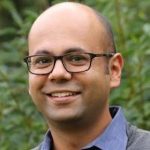
Tarkeshwar Singh
Sensorimotor Neuroscience and Learning (SNL) Laboratory, Penn State University
I am an Assistant Professor at Penn State University in the USA, studying eye-hand coordination during complex actions, including manual interception and movement sequences. As a regular NCM member since 2017, I have attended five meetings and actively contributed to our community.
I organized a panel on interceptive actions at the 2025 Panama City meeting, which featured work from both human and primate models, reflecting my commitment to expanding NCM’s focus on eye movements and eye-hand coordination. During my current term as a Board Member, I also proposed and successfully advocated for double-blind reviews of individual oral presentations to ensure presenters are evaluated solely on scientific merit. NCM 2026 will mark the second year of this practice, which strengthens the quality and fairness of our program and helps ensure our speaker line-up reflects representation from a broad range of countries and institutions.
I am eager to continue this work by inviting and advocating for diverse scientific questions and methods that advance our understanding of the neural mechanisms of sensorimotor integration and control.
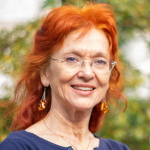
Dagmar Sternad
Departments of Biology, Electrical & Computer Engineering, and Physics, Northeastern University
Since my first NCM conference many years ago, I have been a regular member of the society, as participant, speaker, symposium organizer, and executive member. I have seen the society grow to its current size and international make-up, and I as a scientist I grew with it, always enthused and stimulated by the annual meetings. Understanding how we walk, reach, dance and smile is a hard and multi-facetted problem. I therefore regard it essential to have all model systems represented, addressed with all experimental, methodological, and computational approaches, fostering mutual interaction, collaboration and inspiration. As board member, I would place emphasis that the scientific program will embrace the multitude of disciplinary approaches. Naturally, as a female scientist, I am committed to ensure fair inclusion and involvement of all under-represented minorities. I would be honored to not only benefit, but also to actively contribute to the society.
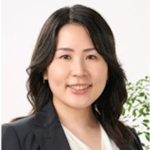
Mayu Takahashi
Department of Physiology, Tohoku University
I have been involved in the NCM Society since 2006. I have organized pre-NCM meetings (2019, 2026) and panel sessions at the main meetings (2019, 2026), and have participated as an invited speaker in multiple NCM symposia and satellite meetings.
My research focuses on neural mechanisms of sensory–motor transformation, particularly oculomotor control in higher mammals. By determining previously unknown circuitry of the vertical saccadic system, I demonstrated that the saccadic system uses the same three-dimensional coordinate framework as the vestibulo-ocular reflex and elucidated key mechanisms underlying saccade triggering. These findings have contributed to revisions of classical textbook models of the saccade generation and triggering systems and have been internationally recognized.
As a Board member, I will contribute to mentoring early-career researchers through active scientific engagement. I am committed to enhancing diversity and inclusion by supporting scientists across countries and disciplines and promoting broader gender representation within the NCM community.
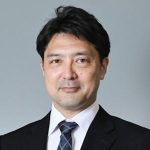
Tomohiko Takei
Brain Science Institute, Tamagawa University
I have been actively engaged in the NCM community since 2006 through regular participation in main meetings and contributions to satellite meetings. My research focuses on integrating physiological experiments in non-human primates with computational modeling to advance our understanding of cortical and spinal mechanisms underlying voluntary motor control.
In an increasingly uncertain global environment, the sustainable development of the NCM community critically depends on maintaining international diversity and collaboration. I have contributed to global neuroscience communities through active participation in international conferences such as SfN, COSYNE, and IBRO. In parallel, I have played leadership roles in domestic initiatives, serving as a board member of the Japanese Motor Control Society and as a councillor of the Japanese Neuroscience Society. Through these activities, I have developed a position that bridges Japanese neuroscience communities with NCM.
As a board member of the NCM, I will work to strengthen interdisciplinary and international exchange and contribute to the long-term growth of the society.
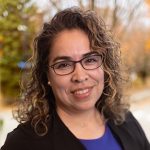
Gelsy Torres-Oviedo
Department of Bioengineering, University of Pittsburgh
I have been an active member of the Society for Neural Control of Movement (NCM), regularly attending the annual meeting since I was a graduate student. I previously served as a board member (2018-2023), where I contributed as a reviewer for meeting submissions and as a session chair and moderator. I thoroughly enjoyed this service and the opportunity to shape the society’s direction.
My focus is now on broadening the society’s inclusivity. Through my outreach work, I have connected with numerous faculty at primarily undergraduate institutions. I plan to use these relationships to promote NCM attendance among scientists who operate with fewer resources than our typical attendees. I believe this initiative will enrich the NCM society by diversifying the scientific perspectives present at our meetings.
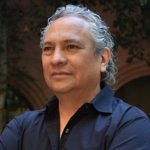
Francisco Valero-Cuevas
Alfred E. Mann Department of Biomedical Engineering & Division of Biokinesiology and Physical Therapy, University of Southern California
My involvement with NCM began as Assistant Professor following my PhD at Stanford with Felix Zajac. As a consistent attendee, presenter, and reviewer, I value NCM as a vital scientific hub for my research at Cornell and USC.
As a Board Member, I will leverage my experience to support scientists at all career stages. This includes scientific contributions to human dexterous manipulation and Neuromechanics, neuro-inspired machine learning algorithms for physical robots, and clinical trials. Professionally, I am a Full Professor with a named chair, have held continuous NIH funding for 23 years, and founded a successful medical device company. As a Latino in Engineering at Cornell and USC, I have led programs and a non-profit dedicated to helping underrepresented students enter elite graduate programs.
In these turbulent times, I will guide NCM toward greater inclusion and diversity via personalized mentorship. Scientifically, I will promote integration across cerebral and spinal circuits, and rigorous development of neuro-informed AI/ML techniques. Finally, I will emphasize translating our discoveries into clinical, robotic, and entrepreneurial applications to ensure NCM’s continued impact.
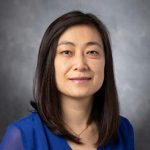
Jing Xu
Cognition and Dexterity (CoDex) Lab, University of Georgia
I have been an active member of NCM since 2015. In the past decade, I have been growing together with the society. Its comprehensive scientific program has taught me a great deal about the cutting-edge research in the field. I also greatly appreciate the training opportunities the society offers to trainees. It’s now time for me to pay back and offer my service to the community. If given the opportunity, I would be happy to contribute to every aspect of the growth of the NCM society, especially in enhancing the quality of its diverse scientific program, extending training opportunities for trainees from diverse backgrounds, especially those among underrepresented minority groups, and raising funds for the society to support those agendas. I believe my diverse training background and experience in running a highly diverse research lab have prepared me to make strong contributions to the community.
Trainee Slate of Candidates for 2026 – 2028 Term
The following candidates have expressed interest and are willing to serve on the Board in the Trainee Board Member role. The trainee position is a two year cycle beginning at the end of the 2026 meeting until the close of the 2028 meeting if elected. Please review a summary paragraph as to how each nominees skills, expertise and current research interests will benefit the current Board and how they will bring diversity to the Society below. All members are welcome to contact these candidates to inquire about their positions prior to voting.
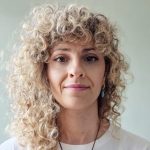
Belkis Ezgi Arikan
Postdoctoral Researcher, University Hospital Essen
I am honored to be nominated for the NCM Board. My involvement with NCM began with my scientific contribution to the 2025 NCM Annual Meeting. Even within this short period, I gained first-hand insight into the breadth of scientific themes and the vibrant, collegial nature of the society.
As a trainee board member, my goal would be to help sustain and strengthen this open and inclusive environment by representing trainee perspectives, facilitating meaningful networking opportunities, and supporting trainee-focused initiatives that promote engagement across career stages. I am particularly motivated to contribute to a broad, high-quality scientific program that reflects the diversity of approaches within the field.
Promoting diversity and inclusion is a core priority for me. I would actively support initiatives that increase the visibility of underrepresented researchers, encourage equitable scholarly exchange, and broaden the range of perspectives and methodologies represented within the NCM community.
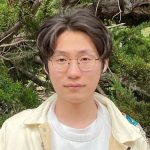
Tianhe Wang
PhD Candidate, University of California, Berkeley
As a member of the NCM community, I have attended every annual conference since 2021, presenting five posters over the years and organizing a panel in 2025. Having benefited significantly from the intellectual rigor of this society, I am eager to give back as a Trainee Board Member. I received my undergraduate training from Peking University and am currently a PhD student at UC Berkeley; my research focuses on the computational principles underlying motor control and motor learning.
I deeply appreciate the importance of an inclusive environment, especially during these evolving times. To improve diversity within the community, I will: 1) proactively reach out to researchers from diverse geographical backgrounds (particularly those in underrepresented regions) to encourage their participation; and 2) encourage members to attend first-timer and trainee events to help newcomers quickly integrate into the society. Specifically, I believe the trainee experience would benefit from more structured organization, such as pairing newcomers with senior members or creating dedicated communication channels to help them navigate the community and build lasting professional connections.
Voting Directions
NCM members in full standing are entitled to cast 4 (four) votes for regular board members. These votes can be cast for 4 separate candidates with one vote each, cast for the same candidate 4 times, or cast for any other combination of candidates with any number of votes to a total of 4 votes cast. The four candidates with the highest total number of votes will be the successful proponents. NCM members will be provided with one vote for the trainee member with the highest number of votes as the successful candidate.
Please note, in order to reduce selection bias, names will be shown in random orders. Please review the names carefully to ensure you are casting your vote for the correct individual.
As an NCM member in good standing, you should have received an email with specific voting instructions. If you have not received this email, please contact us.
The election is open from January 27 – February 10, 2026.
The current list of NCM Board Members can be found by clicking here